Italiano
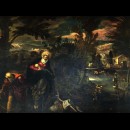
 Il magro bottino che intendono ottenere per mezzo del lancio dei dadi è la tunica di Gesù. Era consuetudine che gli effetti personali dei condannati a morte fossero spartiti fra i soldati ma poiché la tunica era priva di cuciture e costituiva un capo pregiato, viene giocata ai dadi. L'episodio raccontato da Giovanni allude ancora al compiersi delle profezie e intende evidenziare il carattere messianico di Gesù.
Il grande spettacolo sapientemente orchestrato da Tintoretto, evoca il tumulto delle passioni e degli animi nel momento tragico della morte imminente del Salvatore attraverso la dinamica compositiva per gruppi di personaggi. La scenografia spettacolare contribuisce all'uso iperbolico della luce, nel contrasto tra il cielo plumbeo e il bianco surreale del piano marmoreo, che sembra riflettere l'alone luminoso emanato da Cristo.
Gli scopi meschini dei soldati che giocano ai dadi per accaparrarsi la tunica sono tali da richiedere una cavità, uno spazio buio entro il quale rifugiarsi. Nella figura ritratta di spalle appoggiata sul basamento, che indossa una veste color prugna, dobbiamo invece identificare l'autoritratto dello stesso Tintoretto che in muta contemplazione e dolorosa compartecipazione alza lo sguardo al Crocifisso. Accanto a lui il simbolo di speranza e di rinnovamento che spunta dalla roccia: un arbusto verdeggiante collaudata metafora della resurrezione