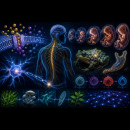
From the brain to the muscles: the journey of electrical messages in neurons

From the brain to the muscles: the journey of electrical messages in neurons

It became much easier to study the transmission of electrical messages in the body once the structure of the brain and spinal cord was understood, and once the particular cells that allow them to communicate were identified, now called nerve cells or neurons.

All this was established through a series of revolutionary advances unified in what came to be called the Neuron Doctrine, which in 1906 earned a Nobel Prize for Camillo Golgi and Santiago Ramón y Cajal.

For the first time, the workings of the nervous system were understood. (Previously, as exchanges among scientists concerning animal spirits make clear, the nervous system was thought to be a set of connected tubes branching from the brain throughout the body; for this reason, it was conceivable that they were filled with water or other fluids, and nothing else about them made sense.)

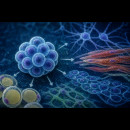
Ramón y Cajal and Golgi understood (again, amid many clashes and disagreements) that the nervous system was made up of individual cells, namely «neurons», capable of transmitting electrical signals from the brain to the nerves and muscles, and also in the opposite direction.

No one had previously realized that the nervous system was made up of cells, because neurons do not resemble ordinary cells at all, which almost always have the shape of a slightly flattened sphere. The neuron has three different parts: a cell body (similar to a normal cell), from which branches of various lengths extend in every direction. There are two types: dendrites, which are very short and carry incoming messages toward the cell body, and the axon, which can be up to a meter long and sends messages from the cell body to other neurons or to the muscles.

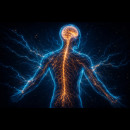
While some of the brain's 86 billion neurons are confined there, many extend down through the spinal cord until they reach the skin, heart, muscles, eyes, ears, nose, mouth, intestines and other organs—in other words, any structure in the body—to enable it to move, perceive and much more.

The so-called «sensory» neurons, through which the brain receives sensations and perceptions, are part of the «afferent system», which carries information about the outside world: images, sounds and smells, but also the fact that the body has suffered scratches and bruises. The «motor» neurons, which transmit the body's intention to move so that it can carry it out, form the «efferent system», which allows it to respond to sensations communicated by the afferent system.
In accordance with the Terms of Use, responsibility for published content rests solely with the user who created it. Perungiorno.it disclaims any liability for content submitted by users.
Report

Maybe you might be interested

Prima dei neuroni: l’antica origine elettrica delle cellule viventi
Italiano Français Español Deutsch

Quando si pensa all'origine della vita, la prima cosa che viene in mente è il codice genetico, cioè a come si sono evoluti il DNA e l'RNA, dando luogo a forme di vita capaci di riprodursi e così via. ...

I segnali elettrici che insegnano alle cellule come costruire il corpo
Italiano Français Português 中國人

Nel corpo abbiamo miliardi e miliardi e miliardi di cellule... ci sono [gli stessi] geni nel naso, negli occhi, nella bocca e nel gomito, il che significa che le cellule di questi tessuti hanno tutte ...

Come l’elettricità ha imparato a correggere il ritmo del cuore umano
Italiano English Español Русский

Il pacemaker trae origine da un tavolo operatorio nella Prussia del 1878. Catharina Serafin era appena sopravvissuta a un'operazione chirurgica brutale che aveva eliminato un'escrescenza maligna, ma a...

Cellule staminali: dalle grandi promesse ai limiti della medicina rigenerativa
Italiano Français 中國人 Русский

Il motivo per cui si parla tanto di cellule staminali è la loro capacità unica di trasformarsi in molti altri tipi di cellule. Sono un po' come i bambini: sulle prime sono infinitamente malleabili ma,...

Bioelettricità: il codice invisibile che guida il corpo umano
Italiano Español Português Русский

Tutti gli organismi viventi sono attraversati dall'elettricità: per quanto possa sembrarci strano, muscoli, ossa, pelle e nervi possiedono una carica in grado di trasmettere messaggi e impulsi ad altr...

Ogni cellula è una batteria: l’elettricità nascosta nel corpo umano
Italiano Español Deutsch 中國人

Il corpo umano è alimentato dalla «bioelettricità». Le correnti non sono create da elettroni ma dal movimento di ioni perlopiù carichi positivamente, come quelli di potassio, di sodio e di calcio.

Carlo Matteucci e l’esperimento che trasformò le rane in una pila
Italiano Español العربية Русский

Carlo Matteucci tagliò l'ultima coscia di rana, separandola dalla legittima proprietaria, e la sistemò con cura sulla pila. Aveva ucciso dieci rane, tagliato le cosce e ridotto ciascuna a una forma si...