 Italiano
  English
  Русский
 According to Darwin, emotions are the result of evolutionary adaptations useful for survival. For example, the expression of fear prepares the organism to flee or face a danger. Emotional expressions evolved to allow individuals to act and communicate effectively with others, thereby promoting the survival of the group.
For a period, this theory was criticized. Anthropologists such as Margaret Mead argued that biology played no role in human nature and that culture and learning alone determined emotions.
In the second half of the twentieth century, however, Darwin's perspective was reassessed thanks to the studies of American psychologist Paul Ekman. Born in 1934, Ekman dedicated his research to non-verbal communication, facial expressions, gestures, and vocal tones, becoming one of the world's leading experts in the field.
Starting in the 1960s, he developed the theory of basic emotions, inspired precisely by Darwin's studies.
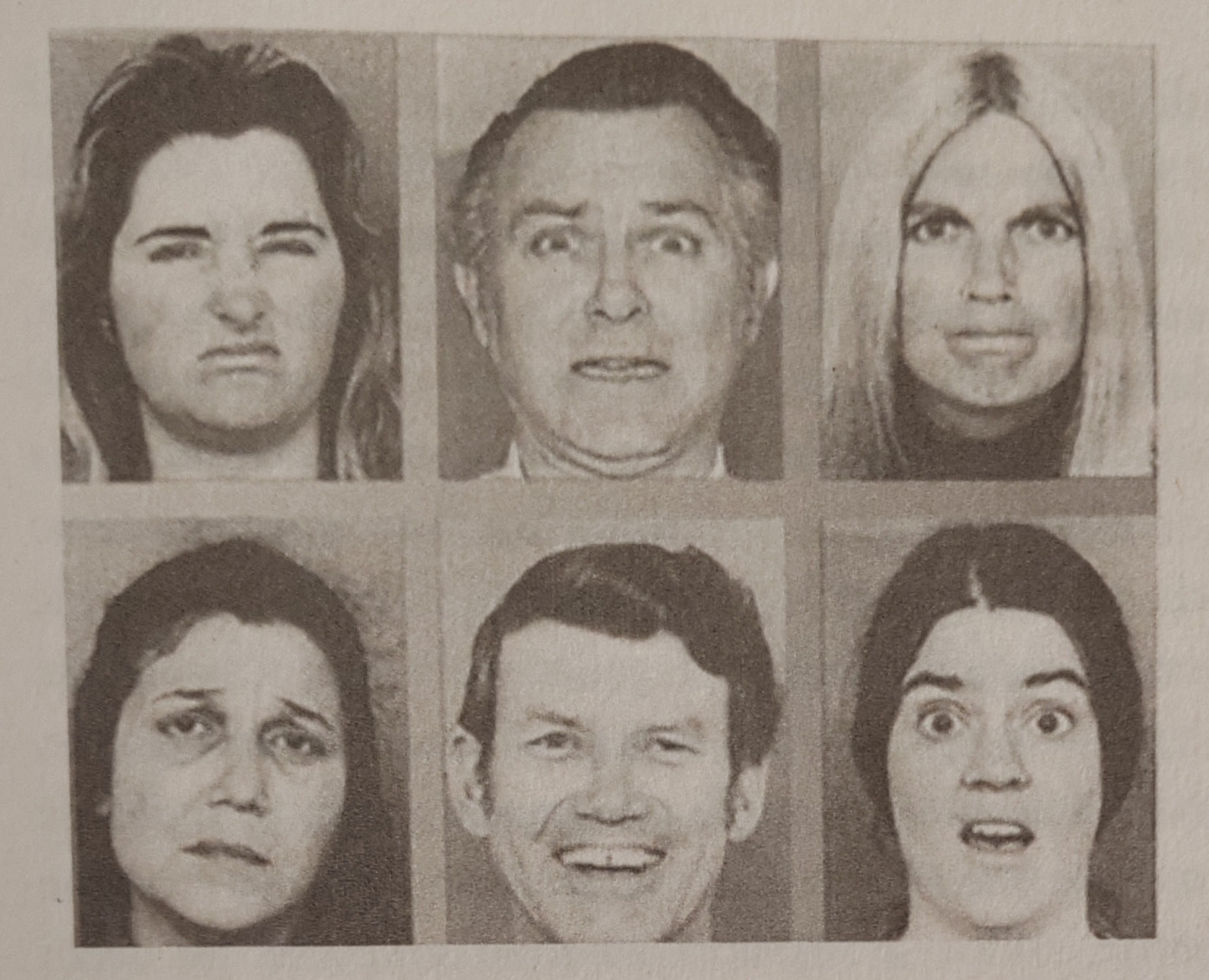
According to Ekman, there are six fundamental, innate, and universal emotions, shared by all human beings and observable through specific facial expressions, regardless of cultural background:
- disgust
- fear
- anger
- sadness
- joy
- surprise
The photographs used by Ekman to identify these emotions were created with actors who reproduced different facial expressions and still represent an important historical reference today.
Disgust
Disgust represents a strong repulsion toward something. It is expressed through a wrinkled nose, raised lips, and sometimes furrowed eyebrows.
It can be triggered both by physical stimuli and by behaviors considered morally unacceptable, transforming into moral disgust or contempt.
Fear
Fear is an emotional response to a real or perceived threat. It is characterized by raised and drawn-together eyebrows, wide-open eyes, and slightly tense lips.
From a physiological perspective, it activates the sympathetic nervous system, increases heart rate, and prepares the organism for the fight-or-flight response through the release of adrenaline.
Anger
Anger arises in situations perceived as unfair, threatening, or frustrating. The facial expression includes lowered and drawn-together eyebrows, a fixed gaze, and tightly closed lips or an open mouth as if growling.
It produces an increase in heart rate, blood pressure, and muscle tension.
If chronic, it can contribute to stress, hypertension, cardiovascular diseases, and digestive disorders. It can also impair the ability to reason clearly, encourage aggressive behaviors, and alter the perception of reality.
Sadness
Sadness generally appears after a loss or a negative event.
It is expressed through downward-turned corners of the mouth, slightly raised and furrowed eyebrows, and, in more intense cases, crying.
From a physiological perspective, it involves a decrease in physical and mental energy, reducing motivation and interest in normal daily activities.
Joy
Joy is a positive emotion associated with pleasant experiences, satisfaction, and success.
The typical expression includes smiling, raised corners of the mouth, and narrowing of the eyes, which creates the characteristic "crow's feet".
It is associated with the production of neurotransmitters such as endorphins and serotonin, which are responsible for the feeling of well-being.
Surprise
Surprise allows attention to be quickly focused on unexpected events.
It is expressed through raised eyebrows, wide-open eyes, and an open but relaxed mouth.
From a physiological perspective, it causes a temporary increase in heart rate and a brief state of hyperactivity, preparing the organism to react quickly.